Pregnancy Complications
Infant- and Family-Centered Developmental Care
Neonatal Eye Health
Hygiene
Rare Diseases
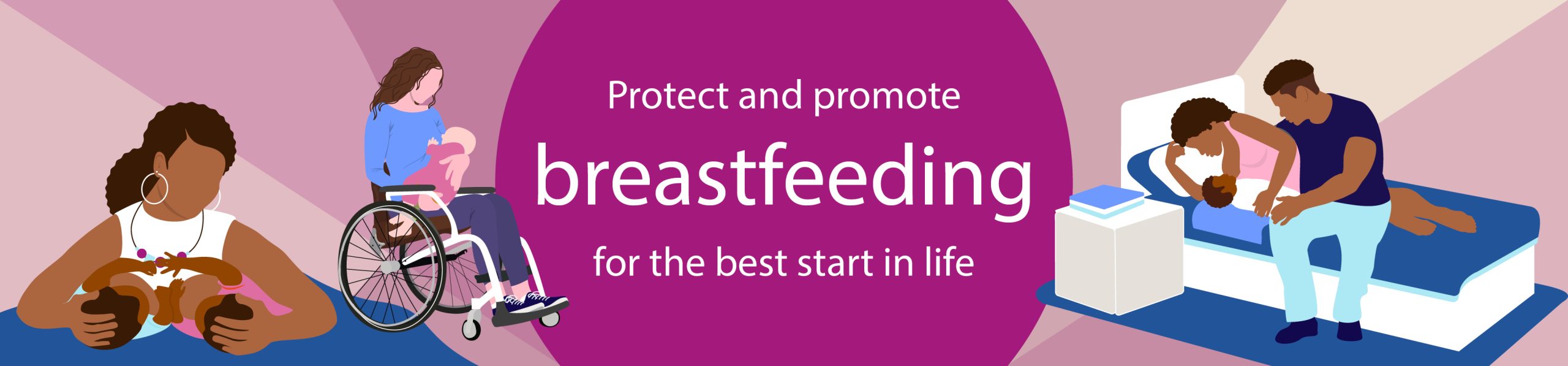
World Breastfeeding Week (WBW) is a global campaign coordinated by the World Alliance for Breastfeeding Action (WABA). Recognized as one of the largest collaborative initiatives of its kind, WBW is supported by major international organizations including the World Health Organization (WHO) and UNICEF. The campaign aims to raise awareness of the numerous benefits of breastfeeding for infants, mothers, and communities.
Since its launch in 1991, WBW has been celebrated annually in approximately 120 countries. In 2016, it became officially aligned with the United Nations Sustainable Development Goals (SDGs), highlighting its relevance in advancing global health and development. While most countries observe WBW from August 1–7, others may commemorate it in May, October, or November, depending on national health priorities and calendar planning.
To learn more about how you can participate in WABA’s advocacy efforts, visit www.worldbreastfeedingweek.org.
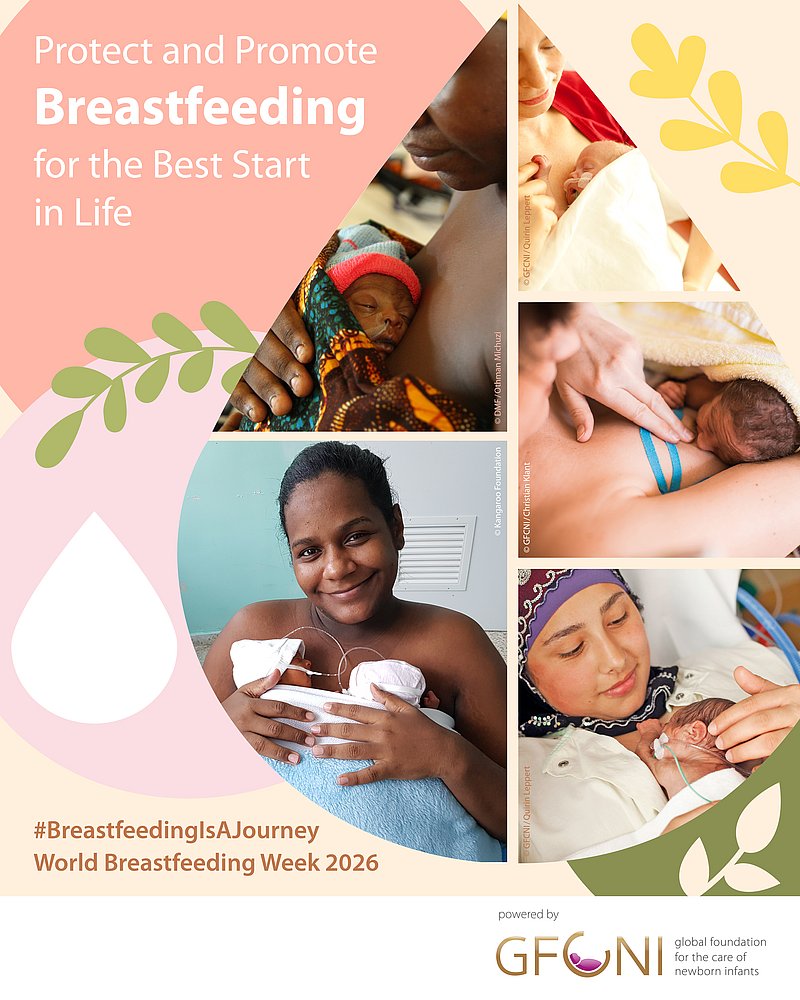
GFCNI is proud to support and take part in World Breastfeeding Week with its own dedicated campaign under the slogan "Protect and Promote Breastfeeding for the Best Start in Life."
While we champion breastfeeding for every newborn, our focus remains on the most vulnerable infants – preterm babies and newborns requiring intensive medical care. These infants often face additional challenges that can interfere with breastfeeding, making targeted support not only essential but lifesaving.
Through awareness, advocacy, and global collaboration, we work to ensure that every baby – regardless of their circumstances – has the opportunity to benefit from the power of breastmilk.
We invite you to join GFCNI’s 2026 social media campaign! Download the material and use it for your own social media posts. Tag us @gfcni on Facebook, @gfcni_newborn on Instagram and @GFCNI – Global Foundation for the Care of Newborn Infants on LinkedIn, and use #BreastfeedingIsAJourney and #WBW2026 to help us find and like your posts.
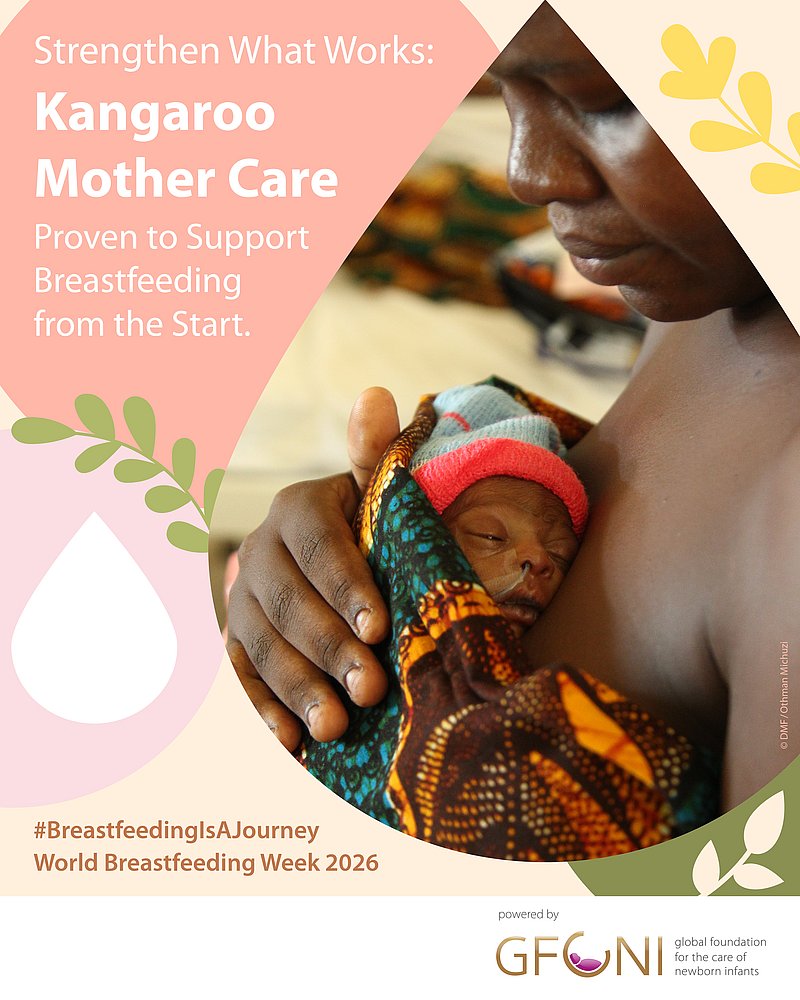
Breastfeeding can be especially challenging when a baby is born preterm, has a low birth weight, or requires care in a neonatal intensive care unit (NICU). This year's GFCNI World Breastfeeding Week campaign highlights Kangaroo Mother Care (KMC) as an evidence-based care model that can help overcome many of these challenges while supporting babies and their families.
KMC combines early, continuous, and prolonged skin-to-skin contact with breastfeeding support to create the conditions that promote successful breastfeeding.
The benefits of KMC for breastfeeding:
By promoting closeness and reducing unnecessary separation, KMC allows breastfeeding to develop more naturally, even when babies are born preterm or require specialized medical care.
At GFCNI, we believe that #BreastfeedingIsAJourney, and that every mother deserves the encouragement to find the path that works best for her and her baby. To truly protect and promote breastfeeding, every family should have access to high-quality breastfeeding support and evidence-based, family-centered care. By strengthening access to and implementation of KMC, we can help ensure that every baby gets the best possible start in life.
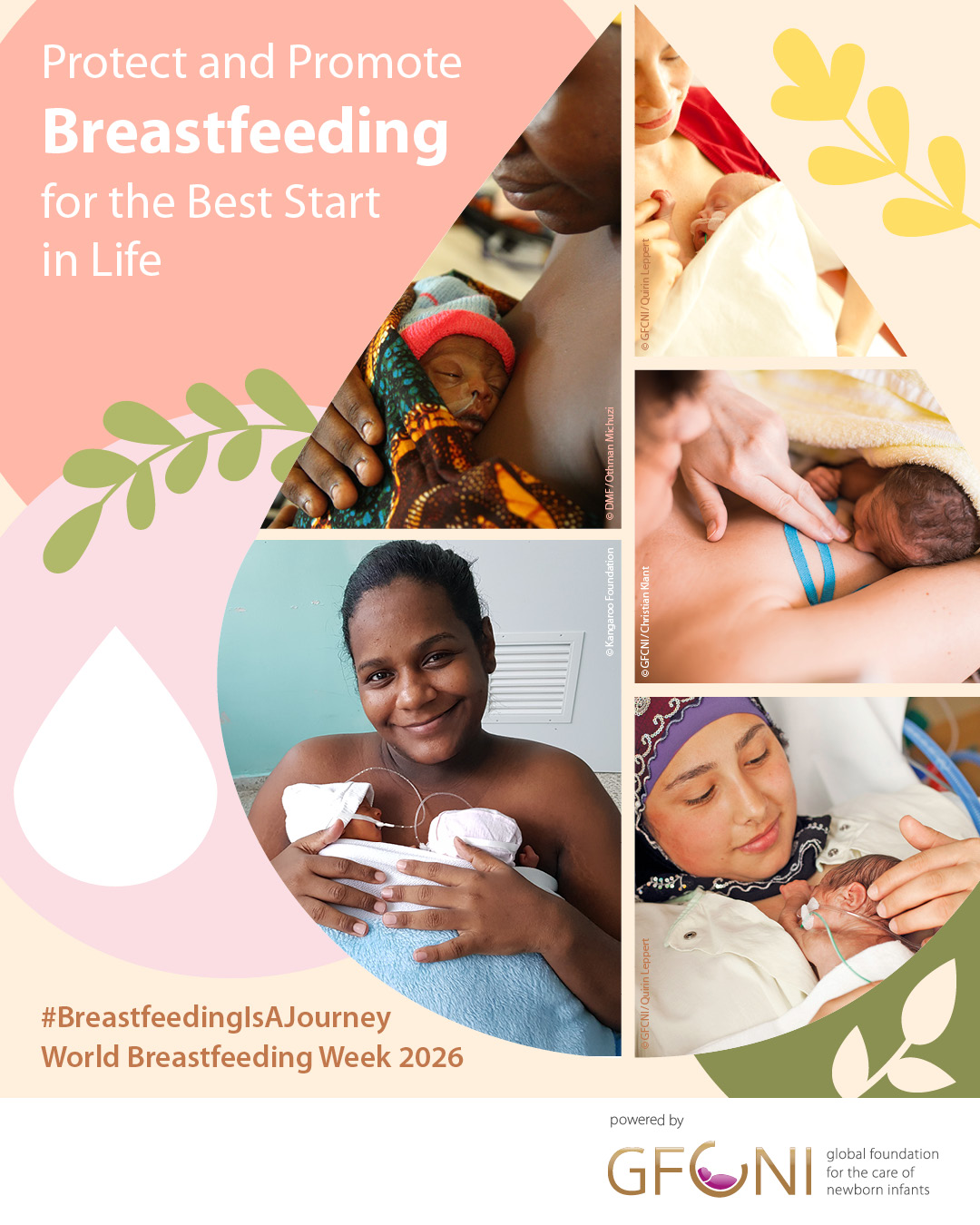
Download our editable social media graphic template, add your logo, and join our World Breastfeeding Week campaign.
Together, we can help protect and promote breastfeeding, raise awareness of Kangaroo Mother Care, and help ensure every newborn receives the best start in life!
Please note:
This template is intended solely to support awareness activities during World Breastfeeding Week. It must not be used for promotional or commercial purposes, including advertising or endorsing breast milk substitutes, infant feeding products, or related commercial goods. Thank you for using our templates responsibly.
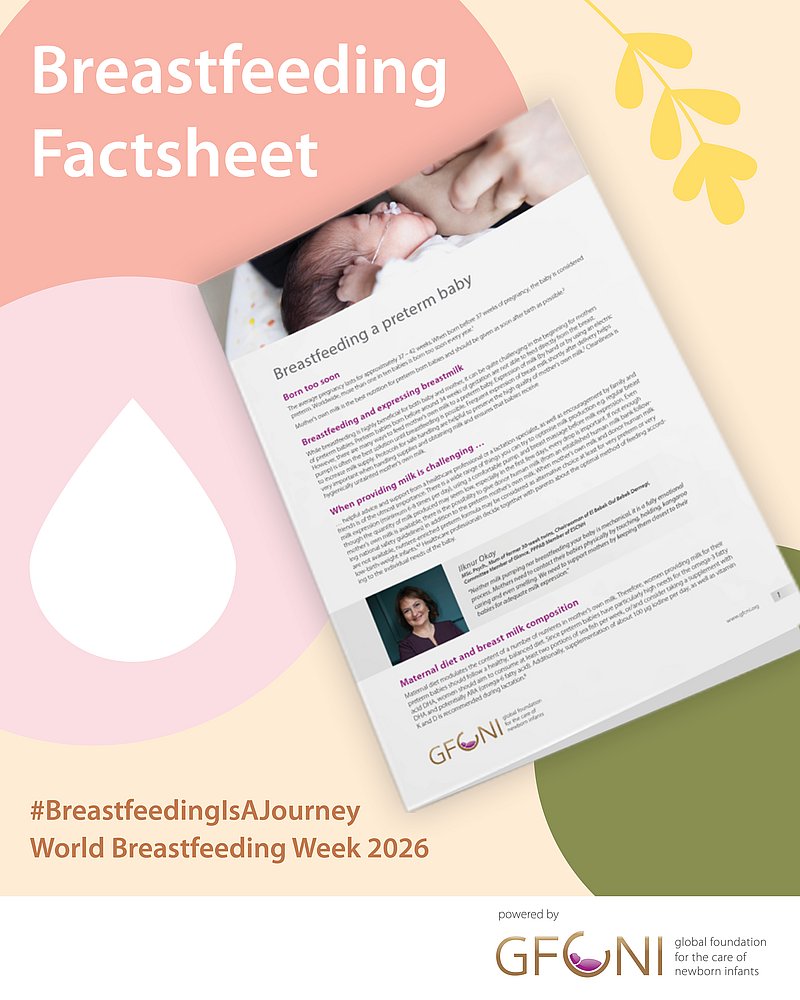
Looking for a quick and practical guide to breastfeeding a preterm infant? Download our comprehensive factsheet, now available in English, German, and Romanian.
This easy-to-read resource covers essential topics to support families during the neonatal period and beyond. Learn more about:
Mothers of preterm and hospitalized newborns often face additional challenges when it comes to establishing and maintaining breastfeeding. In addition to the emotional toll of having a baby in neonatal care, they may need to express milk before their baby can breastfeed directly. They must also navigate complex medical situations and adapt to an unexpected start to parenthood. These circumstances make timely information, practical guidance, and compassionate support especially important.
Protecting and promoting breastfeeding is a shared responsibility. No mother should have to navigate this journey alone. Having a strong warm chain of support – including partners, family, friends, healthcare professionals, and peer supporters – can make all the difference for a good start.
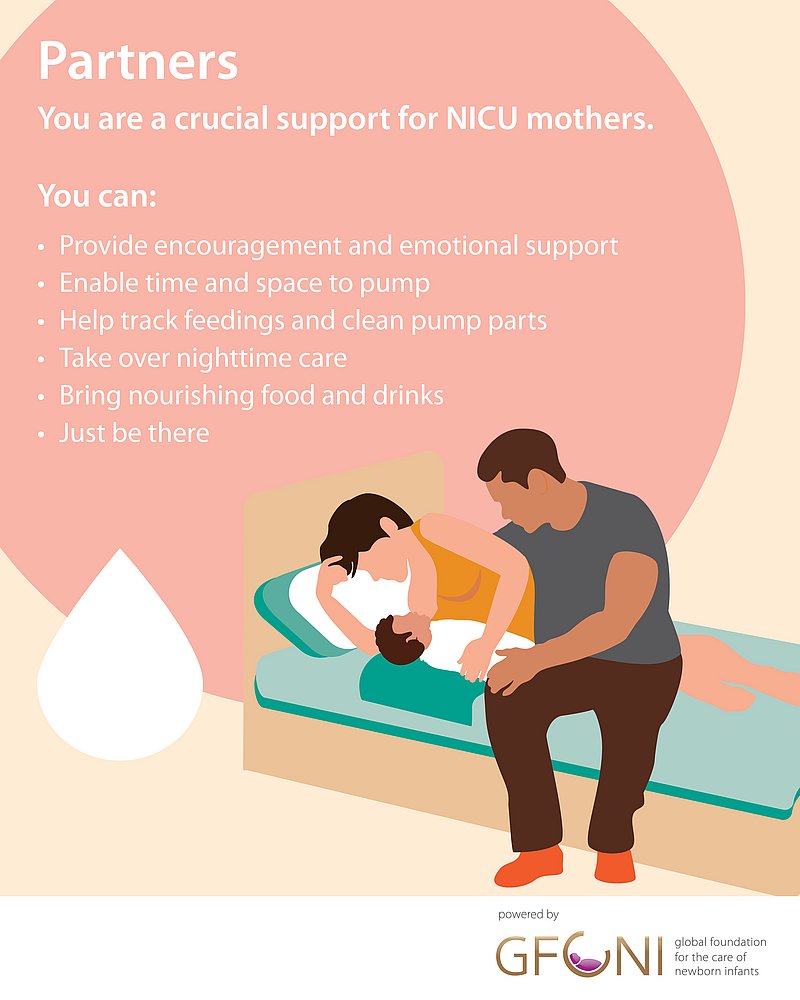
Having a supportive partner is extremely important for every breastfeeding mother, especially those with a baby in the NICU. Partners can:
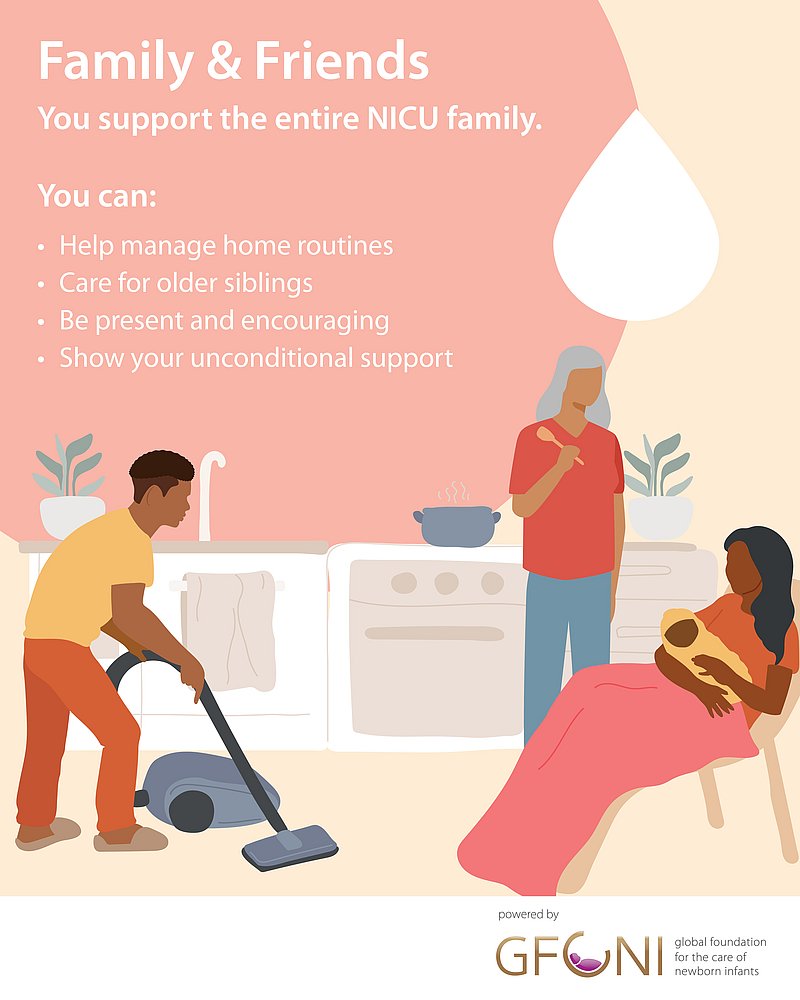
Supportive family and friends can be an enormously important source of emotional support. They can best help by providing practical assistance with everyday tasks:
Important: Please always ask how you can best help. The needs of every mother and family can vary.
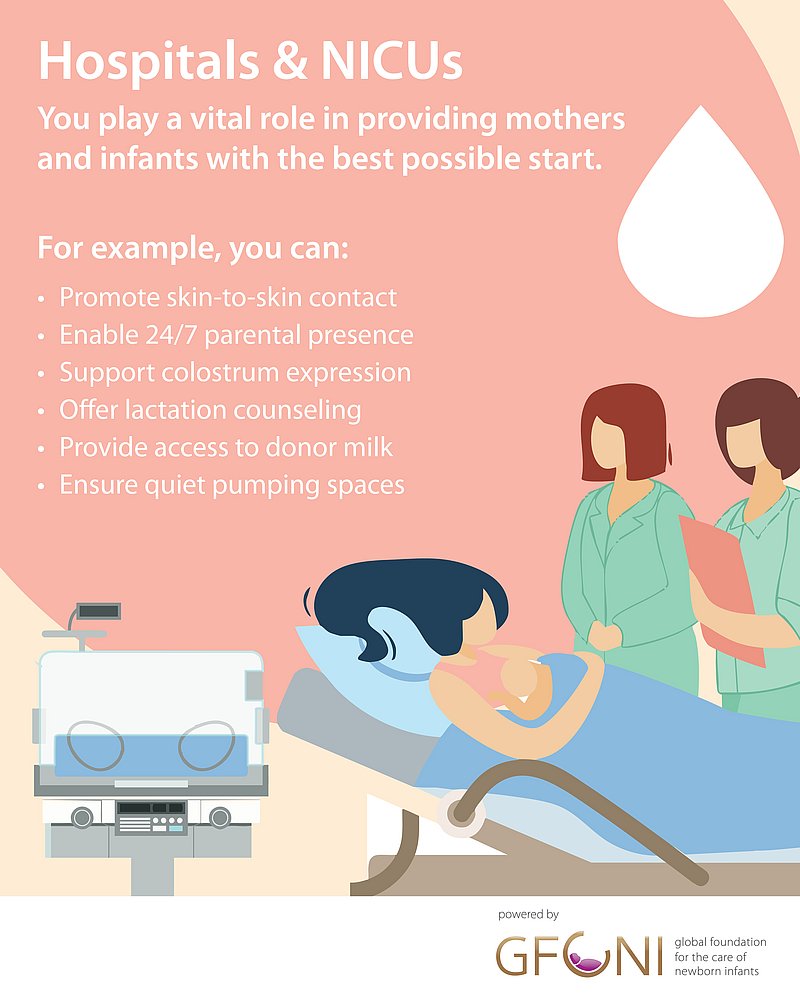
A successful breastfeeding journey often starts in the hospital. Providing baby-friendly, family-centered care helps families feel supported and empowered. For example:
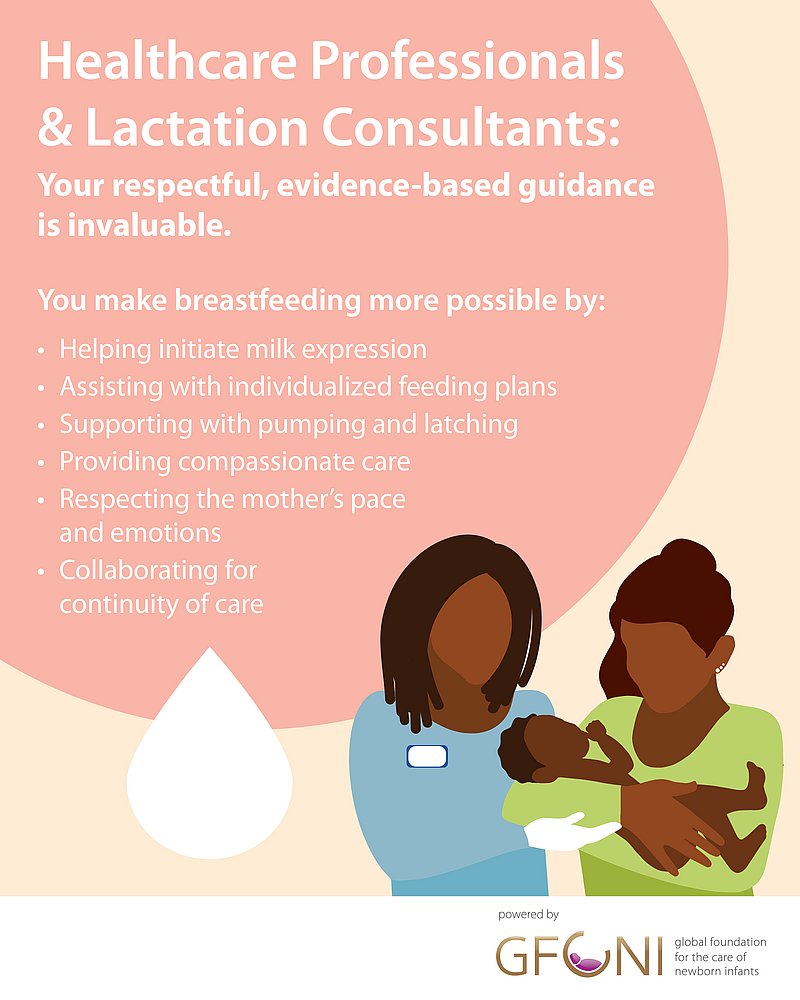
The support of healthcare professionals and lactation consultants is invaluable. Their evidence-based guidance may include the following:
Tailoring their guidance to each baby’s medical needs and developmental stage ensures that every family feels seen, respected, and cared for.
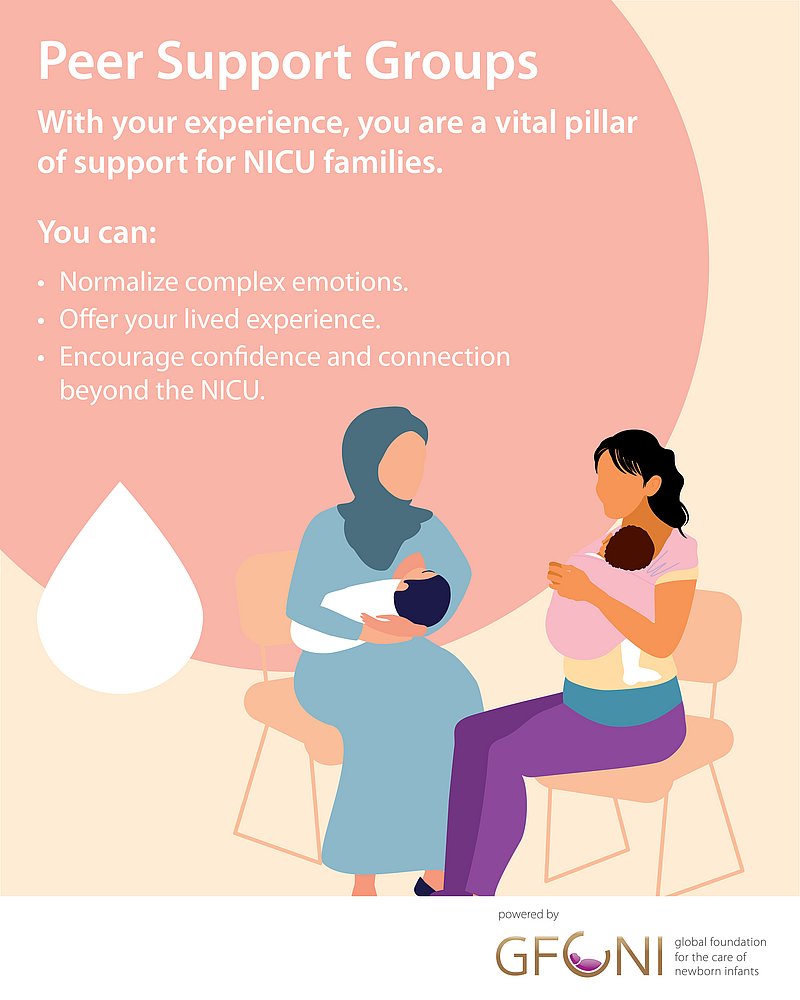
Peer support groups can among others show NICU families that they are not alone with their journey. They can for example:
All content in the “World Breastfeeding Week” campaign was independently developed by GFCNI and reviewed by external experts for medical accuracy. The campaign is powered by GFCNI.
We extend our sincere thanks to the following medical societies for their valuable collaboration and support of this campaign.
We thank the following parent and patient organizations for their invaluable support of this campaign around the world.
GFCNI is the first global organization and network to unite patients, families, healthcare professionals, medical staff, and scientists from different disciplines, fields, and countries – all with the joint goal of advancing the health and quality of care for newborns and their families across the globe.
GFCNI is a non-profit organization established under German public law. Tax Reference Number: 143/235/22619
© 2026 GFCNI. All Rights Reserved.