Pregnancy Complications
Infant- and Family-Centered Developmental Care
Respiratory Infections
Neonatal Eye Health
Hygiene
Rare Diseases

This global series brings together voices from around the world to explore this year’s central theme: the importance of follow-up care after preterm birth and NICU discharge. Through real-life challenges and solutions, best-practice examples, and supportive messages for families, we focus on what babies and families need after leaving the hospital. Above all, this year’s series carries a clear message: small babies have big potential, and timely, meaningful follow-up care can help protect their future.
For babies born too soon, too small, or sick, the first days, weeks, and months after discharge from the hospital can be a critical time. Even more so for families returning home to limited support, financial pressures, or even cultural stigma or harmful taboos around prematurity and newborn illness.
This is one of the many reasons why follow-up care must involve more than follow-up appointments and medical checklists. It must also reach families where they are: in their homes, communities, traditions, and daily realities. To protect the future of babies born too soon, families need practical guidance, reassurance, and a support system that includes not only mothers, but also fathers, relatives, healthcare workers, community leaders, and decision-makers.
As part of our #WPD2026 – Beyond the NICU series, we spoke with Doris Mollel, Founder and Executive Director of the Doris Mollel Foundation in Tanzania, about the importance of community-centered follow-up care, the role of fathers and families, and why babies born too soon can survive and thrive when they receive the right care.
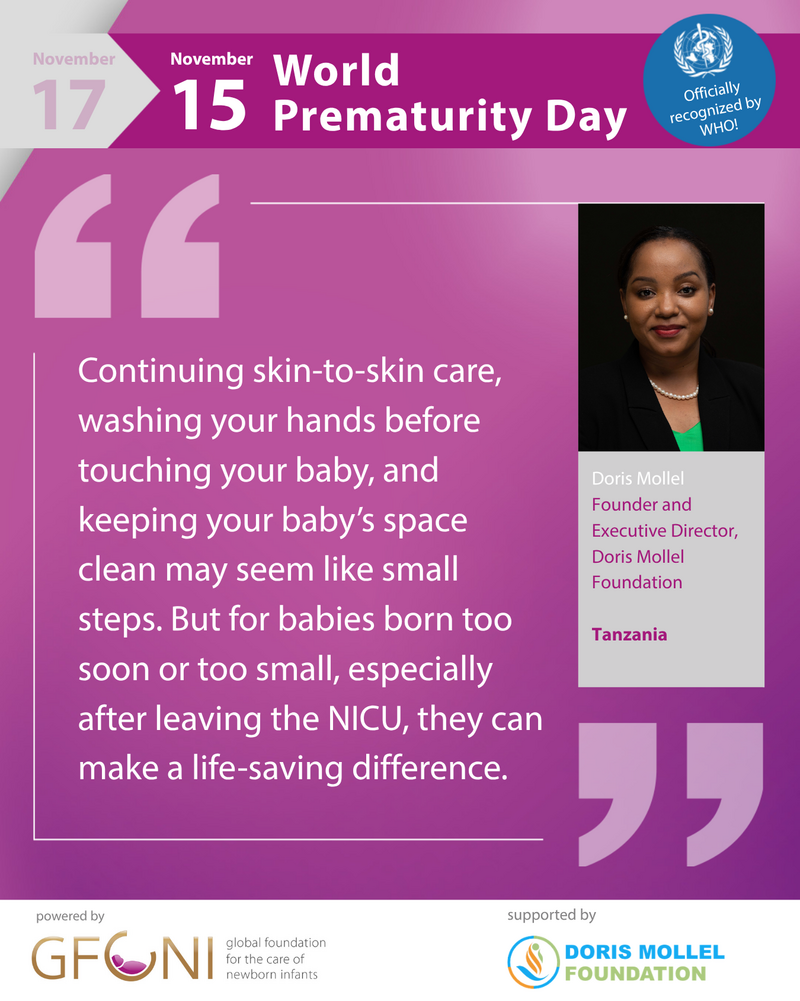
Doris started the Doris Mollel Foundation in 2015, inspired by her own personal story. She was born preterm, weighing only 900 grams. Today, through her foundation, she supports some of the smallest and most vulnerable newborns and their families in Tanzania, while also advocating for stronger newborn health systems and greater awareness of prematurity.
Her advocacy has also contributed to a major global milestone for the preterm community. In 2025, World Prematurity Day was officially recognized by the World Health Assembly as part of the WHO calendar of global health campaigns. This achievement reflects years of dedication from the global preterm community, including Doris’s tireless efforts to bring the needs of babies born too soon and their families to the attention of decision-makers. With this recognition, World Prematurity Day has become an even stronger platform for advocacy, collaboration, and change.
The World Prematurity Day 2026 slogan, “Small babies, big potential. Invest in follow-up care to protect their future,” reflects the same message at the heart of Doris’s work: every baby born too soon deserves the chance to grow, develop, and reach their full potential. But to make this possible, care must continue beyond the hospital, and communities must be part of the solution.
How can families better support babies born too soon, too small, or sick despite stigma or taboos?
Doris Mollel:
A very good example is how we involve men in Kangaroo Care at home, especially in agricultural and pastoral families. A man may be expected to go and take care of the cows, but when he comes back home, he can wash, return to the family, and help his wife with Kangaroo Care. It may look like a small thing, but we need to engage men and talk to them from the beginning.
We need to make sure men go together with their wives to the healthcare facility during pregnancy. They should be there during delivery, but they should also understand the importance of working together to raise a prematurely born baby.
Doris’s message is clear: family involvement cannot begin only after discharge. It should start early, during pregnancy and birth, so that fathers and other family members understand their role in protecting the baby’s health and development.
This is especially important in communities where prematurity, low birth weight, or newborn illness may be surrounded by stigma, taboos, or traditional beliefs that make it harder for families to seek help openly. In these situations, mothers may carry an enormous burden alone. They may be expected to care for a fragile baby while also managing household responsibilities, financial stress, and emotional pressure.
Involving fathers, relatives, and community members can help change this. When families understand that babies born too soon need warmth, hygiene, feeding support, close monitoring, and timely medical care, they can become active partners in follow-up care. Small actions, such as supporting skin-to-skin care (Kangaroo Care), helping with daily tasks, washing hands before touching the baby, or recognizing warning signs, can make a meaningful difference.
But Doris also emphasizes that organizations and decision-makers need to change how they work with communities.
The challenge is that decision-makers, organization leaders, multilaterals, and governments do not always connect well with community members. When I say community members, I mean the people on the ground, including local communities and societies. In everything we do, in the ideas and decisions we have, we need to decide with them and not for them.
This is the best way to reduce the challenges we see, especially taboos and harmful traditional practices that create discomfort for families who are raising babies born too soon, too small, or sick. If we change our way of thinking and start developing proposals, concepts, and activities together with the end users, the community members, it can really help. They know how best to bring together health messages and their traditional ways of thinking without discrimination and without taking them away from the culture they are used to.
This perspective is essential for meaningful follow-up care. Programs are more likely to be trusted and used when they are shaped with the people they are meant to support. Community members understand local beliefs, family structures, barriers, and strengths. They can help adapt follow-up care in ways that are respectful, realistic, and effective.
For World Prematurity Day 2026, this is a central message: investing in follow-up care also means investing in community partnerships. It means listening to families, working with local leaders, and building support systems that fit the real lives of babies and caregivers after discharge.
What is one message you would like to share with parents taking their preterm babies home after discharge?
Doris Mollel:
My one big message to families, especially African families, is that preterm babies can survive when you give them the right care. As family members, we have to be part of giving them the right care, especially when babies and families are released back home.
Kangaroo Mother Care should continue. Kangaroo Father Care should continue. Skin-to-skin contact should continue. All family members should help make sure the baby is in good condition.
Families should wash their hands with water and soap before touching the baby. The room where the baby sleeps should be clean and hygienic, so that we reduce the risk of infection. These are small things we can do, but babies can survive when we give them the right care.
Doris’ message highlights a simple truth: everyone has a role to play in raising babies born too soon.
For families, this message is both practical and hopeful. After discharge, parents may feel afraid of doing something wrong. But Doris reminds us that many protective steps are simple and possible at home: continuing skin-to-skin care, keeping the baby warm, washing hands, maintaining a clean sleeping space, watching the baby closely, and asking for medical help when needed.
At the same time, these steps should not fall on mothers alone. When fathers, grandparents, siblings, relatives, and community members understand their role, the baby is better protected, and the family is less isolated.
This is what follow-up care can look like at community level: not only formal appointments, but shared knowledge, practical support, and everyday actions that help babies stay safe after leaving the hospital.
The 2026 World Prematurity Day theme calls on governments, health systems, healthcare professionals, advocates, and communities to strengthen follow-up care after discharge. Doris’s work shows why this must include families and communities as active partners. Babies born too soon have big potential, and when the right care continues at home, that potential can be protected.
By listening to communities, addressing stigma with respect, involving fathers and families, and supporting simple but life-saving care practices, we can help more babies born too soon, too small, or sick not only survive, but grow, develop, and thrive beyond the NICU.
Read more about Doris Mollel Foundation’s mission and the programs they lead in Tanzania: Doris Mollel Foundation
Small babies, big potential – for many small or sick newborns, the journey begins at the NICU. In the neonatal intensive care unit, babies are cared for by healthcare professionals around the clock, supported by specialized equipment, and held close by their parents through practices such as skin-to-skin care (Kangaroo Care).
The moment when it’s time to take a baby home from the NICU can bring deep joy and relief. But it can also bring uncertainty, anxiety, and fear of what comes next. Even with discharge planning, detailed conversations, and home-care checklists, families experience a sudden loss of the continuous, specialized support they received in the NICU. In the first days after discharge, parents may feel overwhelmed as they take on the full responsibility of caring for their baby, or babies, at home.
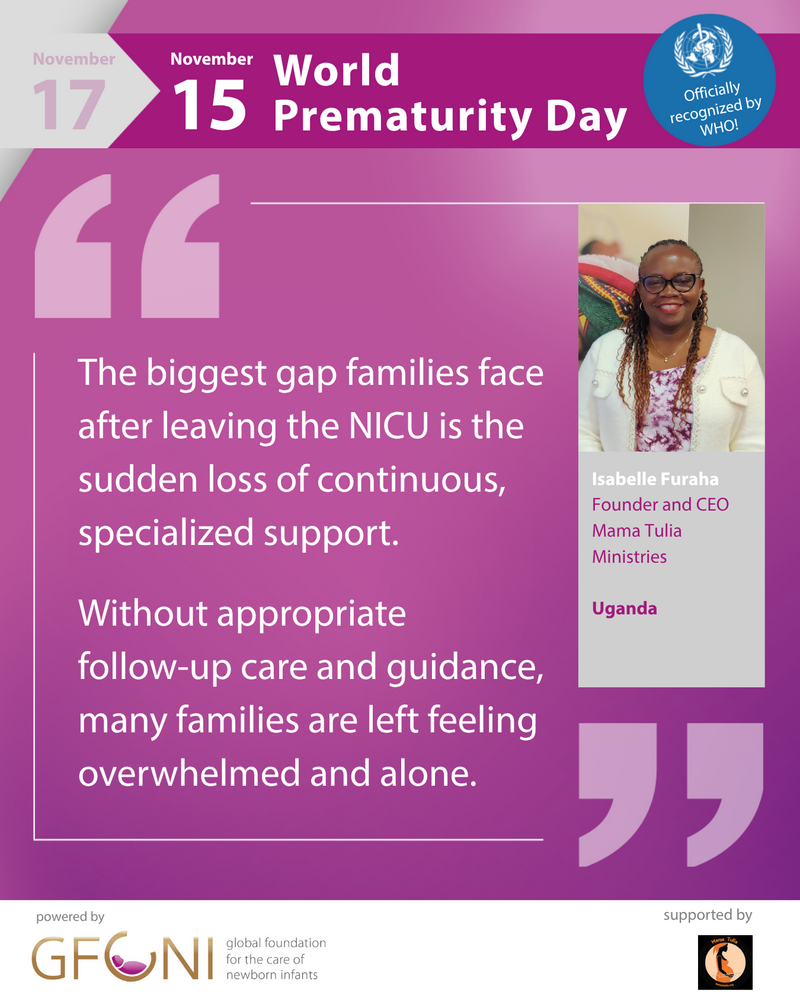
Although follow-up care looks very different around the world, these feelings of fear, uncertainty, and helplessness after NICU discharge are familiar to many mothers, fathers, and caregivers across countries and communities.
How can this uncertainty be reduced? How can knowledge gaps be addressed so that babies are safe and supported in their first days and weeks at home?
We spoke with Isabelle Furaha, Founder and CEO of Mama Tulia Ministries in Uganda, to learn more about what follow-up care looks like in her community and how her organization supports families during the transition from hospital to home.
Mama Tulia Ministries has made it its mission to support and educate families beyond the NICU and to help address the challenges families face throughout their prematurity journey. Much of the organization’s work focuses on what happens after babies leave the hospital. This includes follow-up visits at home, support for a safe transition into the home environment, and access to specialized services such as ROP screening (short for Retinopathy of Prematurity).
The organization’s efforts were recognized at the GFCNI Parent and Patient Organizations’ Summit in March 2026, where Mama Tulia received the Innovation and Collaboration Award. Their impact shows the outstanding efforts of the team: Over the years, the organization has reached more than 50,000 mothers and babies, conducted over 729 home visits, and facilitated more than 500 hospital engagements (as of July 2026). Read more about their award and achievements on Mama Tulia’s website.
What is the biggest gap families face after leaving the hospital?
Isabelle Furaha:
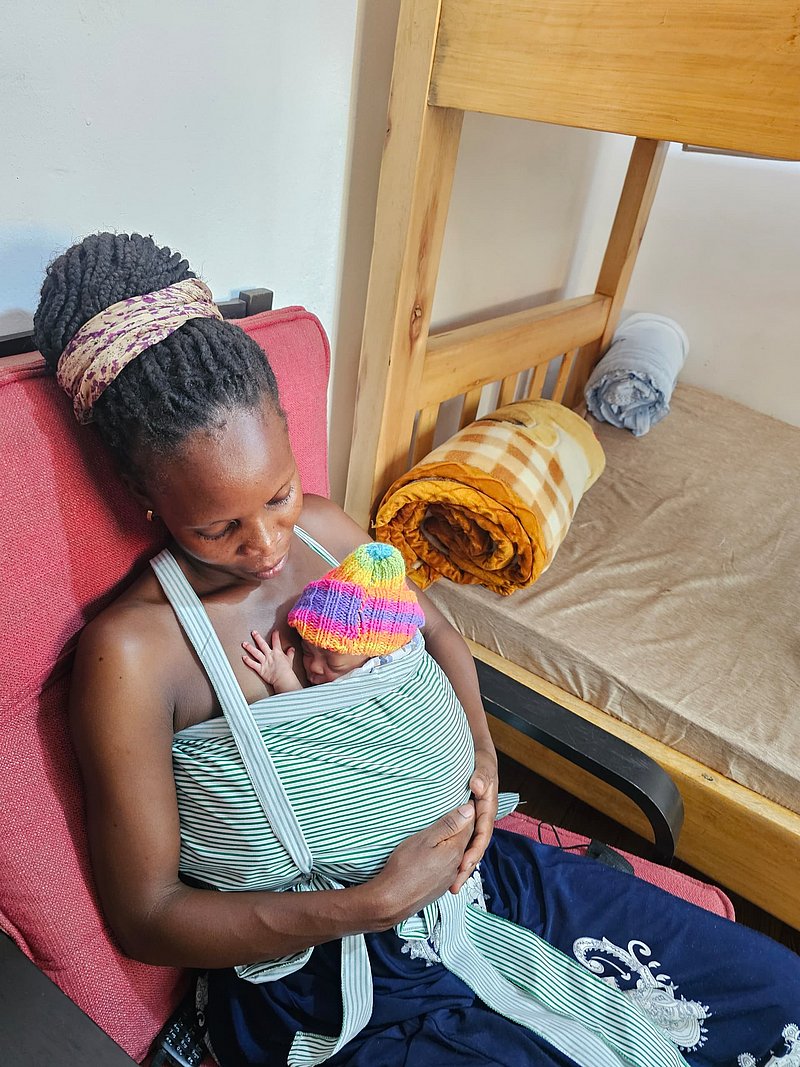
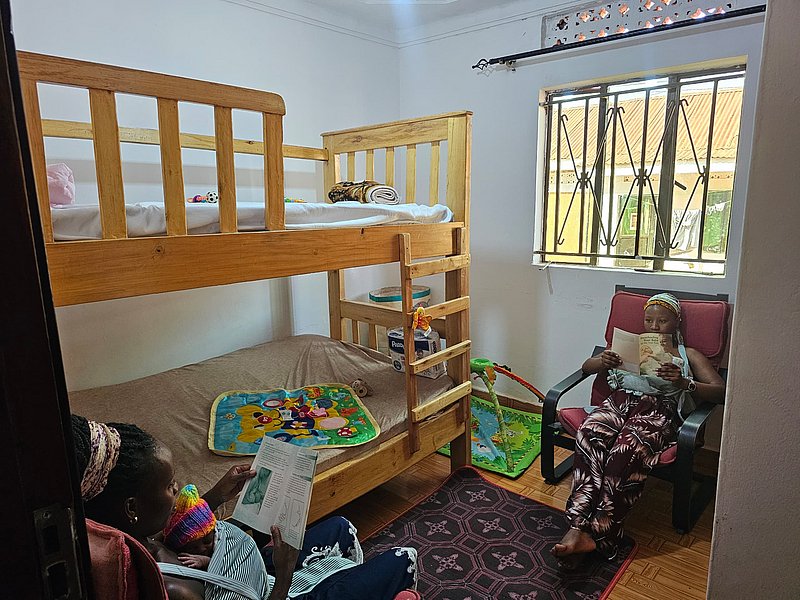
At home after being discharged from the NICU, parents are still managing fragile babies’ feeding, monitoring growth, and watching for warning signs while also dealing with fear and uncertainty. Mama Tulia exists to bridge this gap through post-discharge education, follow-up care, and support programs like home visits. We also created Tulia Tender Nest Home, a transitional home that has already supported 20 mothers and 24 babies as they safely move from hospital to home (as of July 2026).
In the Tulia Tender Nest Home, mothers receive breastfeeding support, Kangaroo Care guidance, nutritious meals, emotional and spiritual care, health education, and the confidence to care for their little ones.
An additional challenge that many mothers in Uganda face is the loss of support from their husbands or partners after the preterm birth of a baby, increasing financial pressure and the emotional toll. For this reason, equipping mothers with knowledge, confidence, and practical support can be one of the most important ways to help babies and families safely transition from hospital to home.
Isabelle’s commitment to this work is deeply personal. She experienced the loss of her preterm baby, who passed away just one day after birth. When her second pregnancy also ended in preterm birth, she once again faced anxiety and helplessness. This time, her beautiful daughter survived, and Isabelle could take her home after the NICU.
What is one message you would like to share with parents taking their preterm babies home after discharge?
Isabelle Furaha:
You know your baby and you are not alone. It’s okay to feel unsure, but trust what you’ve learned and ask for help when needed. Progress may be slow, but every small step matters. Give yourself grace, stay connected to support, and remember your love and care are powerful.
Read more about Mama Tulia Ministries’ mission and the life-saving programs they lead in Uganda: Our Programs | Mama Tulia Ministries
For access to World Prematurity Day resources in multiple languages, visit our dedicated webpage.
Join our global movement to raise awareness about preterm birth and the importance of follow-up care beyond the NICU. Together, we can inspire global action and make sure that follow-up care and life beyond the NICU becomes an integral part of the healthcare agenda globally!
GFCNI is the first global organization and network to unite patients, families, healthcare professionals,
medical staff, and scientists from different disciplines, fields,
and countries – all with the joint goal of advancing the health and quality of care for newborns and their families across the globe.
GFCNI is a non-profit organization established under German public law. Tax Reference Number: 143/235/22619
© 2026 GFCNI. All Rights Reserved.