Pregnancy Complications
Infant- and Family-Centered Developmental Care
Respiratory Infections
Neonatal Eye Health
Hygiene
Rare Diseases

Air pollution is an invisible yet powerful threat - and its effects begin far earlier than most people realize. Increasing evidence shows that tiny airborne pollutants such as ultrafine particles (UFPs) and micro- and nanoplastics (MNPs) can enter the human body, reaching sensitive tissues including the placenta and fetal environment. These particles originate from everyday sources such as traffic, industrial emissions, and plastic waste.
The UPRISE project was created to address this urgent public health challenge. By combining expertise from environmental science, medicine, toxicology, epidemiology, and public health, UPRISE aims to understand how early-life exposure to UFPs and MNPs contributes to:
UPRISE’s mission is clear: to generate robust scientific evidence that supports better policies, healthier pregnancies, and improved outcomes for future generations.
UPRISE focuses on one fundamental question:
How do ultrafine particles and micro- and nanoplastics affect pregnancy and newborn health?
To answer this, the project pursues these key objectives:
Scientific Investigation
Environmental Monitoring
Biological Pathways & Mechanisms
Policy and Public Health Impact
By addressing these aims, UPRISE strengthens the scientific foundation for prevention, regulation, and healthier environments for pregnant individuals and their children.
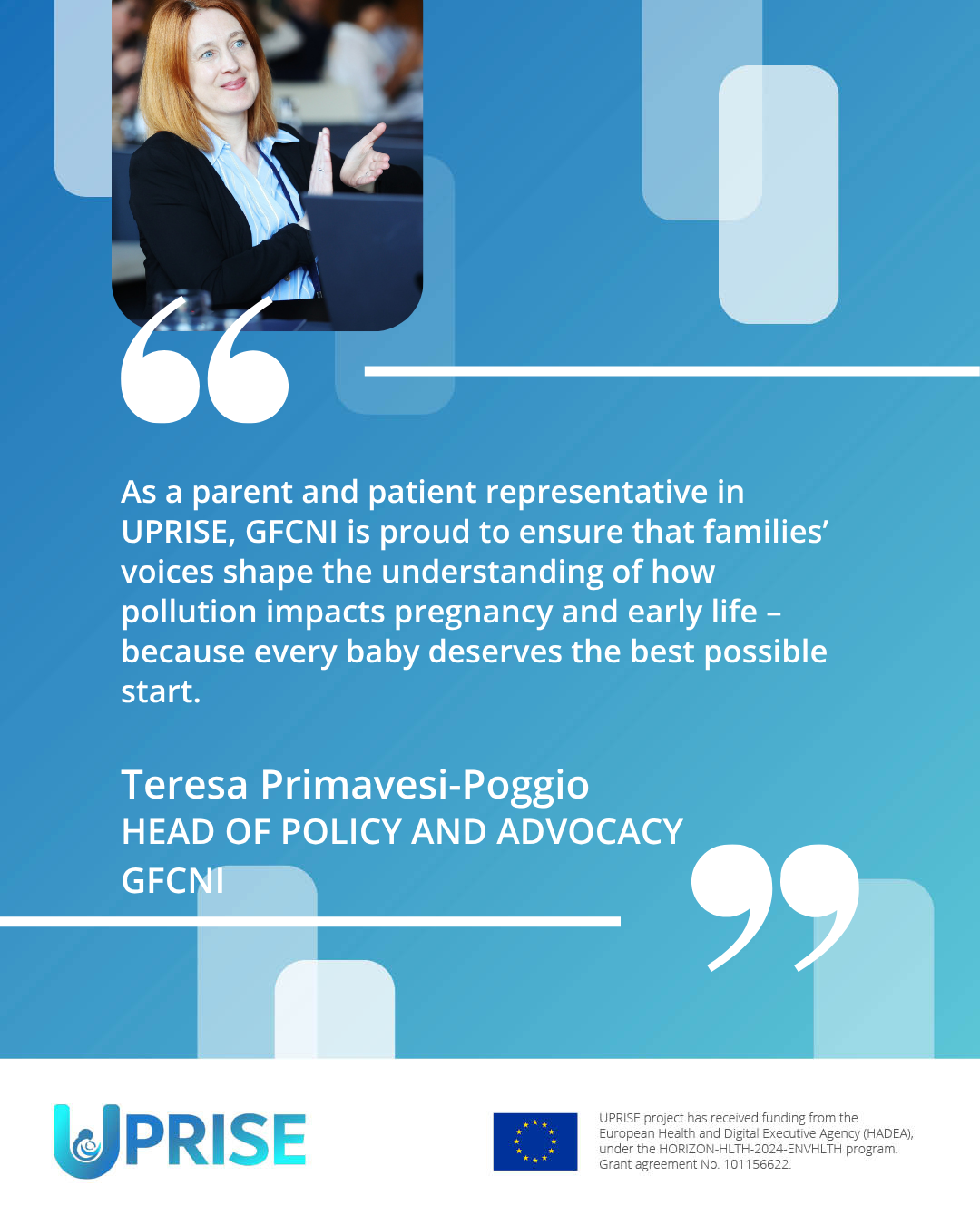
Ensuring that research outcomes truly benefit families requires the voices of those most affected. That is why UPRISE includes a dedicated Parent Advisory Board (PAB), coordinated by the Global Foundation for the Care of Newborn Infants (GFCNI).
Role of the Parent Advisory Board
The PAB ensures that the lived experiences of parents—especially those affected by preterm birth—inform the project’s communication, dissemination, and policy outreach.
The PAB contributes by:
Representation and Structure
Through active parent and patient involvement, UPRISE bridges the gap between scientific discovery and practical impact.

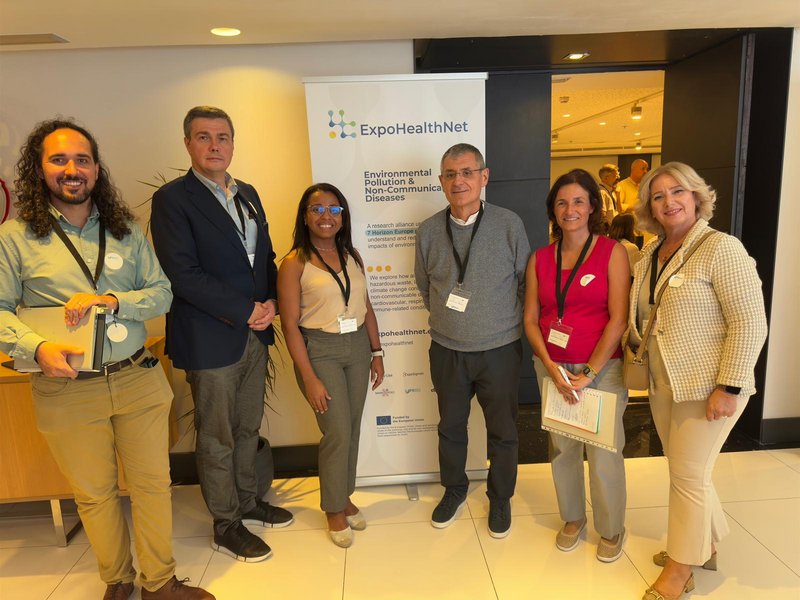
Collaboration is essential to tackling complex environmental health challenges. UPRISE is part of ExpoHealthNet, a Horizon Europe-funded cluster that unites seven leading research projects investigating how environmental exposures contribute to non-communicable diseases (NCDs).
ExpoHealthNet strengthens UPRISE by enabling:
Funded with more than €56 million across all participating consortia, ExpoHealthNet fosters a unified, Europe-wide approach to exposome research.
Learn more: ExpoHealthNet

Funded by the European Union (grant no. 101156622). Views and opinions expressed are however those of the author(s) only and do not necessarily reflect those of the European Union or the European Health and Digital Executive Agency (HaDEA). Neither the European Union nor the granting authority can be held responsible for them. Swiss participants in this project are supported by the Swiss State Secretariat for Education, Research and Innovation (SERI).
GFCNI is the first global organization and network to unite patients, families, healthcare professionals, medical staff, and scientists from different disciplines, fields, and countries – all with the joint goal of advancing the health and quality of care for newborns and their families across the globe.
GFCNI is a non-profit organization established under German public law. Tax Reference Number: 143/235/22619
© 2026 GFCNI. All Rights Reserved.