Pregnancy Complications
Infant- and Family-Centered Developmental Care
Respiratory Infections
Neonatal Eye Health
Hygiene
Rare Diseases

Whooping cough, also called pertussis, is a highly contagious respiratory infection. While its name may sound mild, it can cause serious illness in young babies, including severe coughing, breathing problems, pneumonia, and hospitalization. Babies are especially vulnerable in their first months of life, before routine vaccination begins. Vaccination during pregnancy can help protect newborns by passing on antibodies before birth, giving babies early protection when they need it most.
Whooping cough, also called pertussis, is a highly contagious respiratory disease that occurs worldwide and can spread throughout the year. It often begins with symptoms that may look like a common cold, such as a runny nose, sneezing, mild fever, and a light cough. After a few days, however, the cough can become much more severe, with intense coughing fits that can make it hard to breathe and may last for weeks. In babies, pertussis can cause serious complications, including breathing problems, pneumonia, and hospitalization.
Pertussis is passed from person to person through droplets, mainly when someone coughs, sneezes, or speaks. Many people do not know they have pertussis and may pass it on without realizing it. People can also be highly contagious before the first symptoms appear, which makes the infection easy to spread.
Newborns are especially vulnerable to whooping cough in the first weeks and months after birth because they are not yet fully protected. Routine infant vaccination starts later, and protection does not develop right away. Babies usually need a series of vaccinations over time before stronger protection builds up. This creates an important gap in protection at the beginning of life, when babies are most at risk. This is especially important with pertussis, because the illness can be most severe in very young infants, particularly those under 2 months of age.
During this early period, babies rely on protection from adults around them and on antibodies passed on before birth. Maternal antibodies can provide passive immunity in the first months of life, when newborns are still too young to build protection through their own vaccination series.
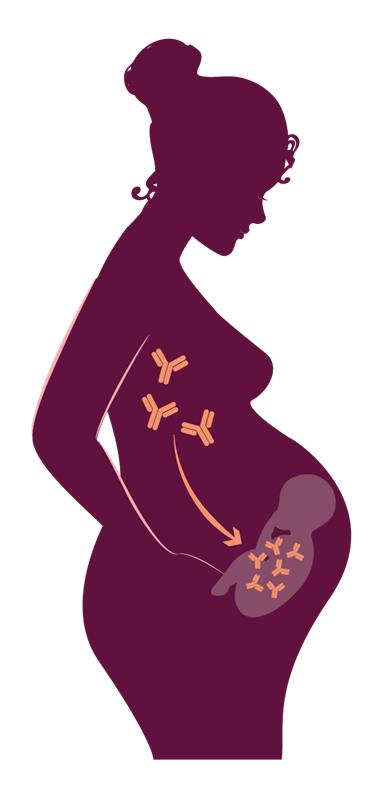
Vaccination during pregnancy helps protect babies before they are born. After vaccination, the pregnant person’s body makes antibodies against pertussis. Some of these antibodies are then passed to the baby during pregnancy, giving the baby early protection before birth and in the first weeks of life, when newborns are most vulnerable. This kind of early protection is often called passive immunity. It means the baby benefits from the mother’s antibodies until they are old enough to begin building protection through their own routine vaccinations.
This is why vaccination during pregnancy is so important. Vaccination during pregnancy is recommended during every pregnancy because the timing helps maximize the maternal antibody response and supports the transfer of protective antibodies to the infant. This protection comes from vaccination during pregnancy, not after birth.
Vaccination during pregnancy can also help protect the pregnant person from pertussis. That matters too, because reducing the risk of infection during pregnancy may also reduce the chance of passing the infection on to a newborn after birth.
Vaccination during pregnancy is recommended because it helps the body make antibodies that can then pass to the baby before birth. Timing matters because this transfer does not happen instantly. The vaccine needs to be given early enough in pregnancy for the body to build antibodies and pass them on to the baby, helping provide protection from the very beginning. Timing is important because it helps maximize the maternal antibody response and supports passive antibody transfer to the newborn.
WHO advises vaccination during pregnancy in the second or third trimester, preferably at least 15 days before the end of pregnancy. WHO also explains that immunity from the vaccine passes to the baby through the placenta and helps protect the baby in the first weeks of life, until routine infant vaccination begins.
Because recommendations can vary by country, and because every pregnancy is different, it is important to talk to your doctor, midwife, or other healthcare provider about the right timing for you. This is especially important if there is a possibility of preterm birth. In some situations, vaccination may still be helpful even if the ideal window has passed.
If you would like to learn more about whooping cough and vaccination during pregnancy, it can help to start with trusted health sources. Global recommendations may differ from national guidance, so talk to your healthcare provider about what applies to you and your pregnancy.
All content in the “Protecting Babies from the Very Beginning” campaign was independently developed by GFCNI and reviewed by external experts for medical accuracy. The campaign is powered by GFCNI.
GFCNI sincerely thanks the European Association of Perniatal Medicine (EAPM), the European Board & College of Obstetrics and Gynaecology (EBCOG), and the Fetal Medicine Foundation (FMF) for their valued collaboration and strong support.


Sanofi supports the campaign but has no influence on its content and messaging.
GFCNI is the first global organization and network to unite patients, families, healthcare professionals,
medical staff, and scientists from different disciplines, fields,
and countries – all with the joint goal of advancing the health and quality of care for newborns and their families across the globe.
GFCNI is a non-profit organization established under German public law. Tax Reference Number: 143/235/22619
© 2026 GFCNI. All Rights Reserved.