Pregnancy Complications
Infant- and Family-Centered Developmental Care
Respiratory Infections
Neonatal Eye Health
Hygiene
Rare Diseases
Guest article by Kylie Pussell, Yamile Jackson, and Lucie Žáčková
When parent organizations come together, learning does not stay within one country, one hospital, or one health system. It travels – through shared stories, practical examples, professional exchange, and the relationships that grow between people committed to improving neonatal care.
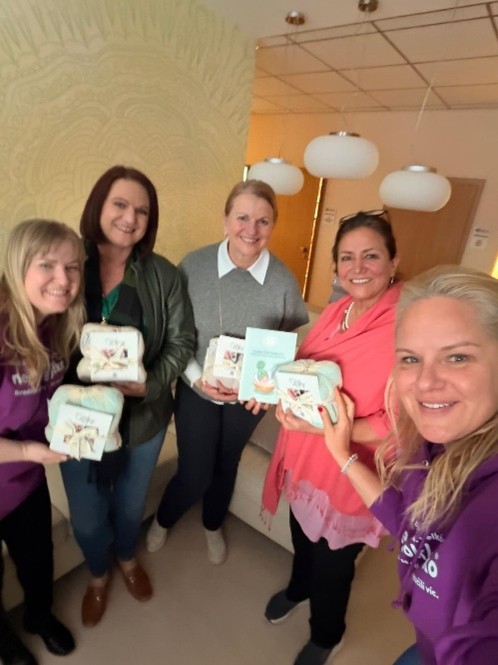
After attending the GFCNI Parent and Patient Organizations Summit in March 2026, Kylie Pussell, co-founder and CEO of Miracle Babies Foundation in Australia, continued her journey through Europe with Yamile Jackson. Yamile is a USA-based ergonomics and safety engineer and founder of International Kangaroo Care Day, held annually on May 15. What began as a post-Summit trip became an opportunity to visit neonatal intensive care units, meet parent and patient organizations, exchange knowledge with healthcare professionals, and reflect on how families of preterm and sick newborns can be better supported across very different care settings.
One of the central stops on this journey was Prague, where Lucie Žáčková, Director of parent and patient organization Nedoklubko, welcomed Kylie and Yamile to the Czech Republic. Together with the Nedoklubko team, she organized a seminar focused on themes that shape the daily experience and long-term outcomes of families in neonatal care: skin-to-skin contact, zero separation, and structured parent support.
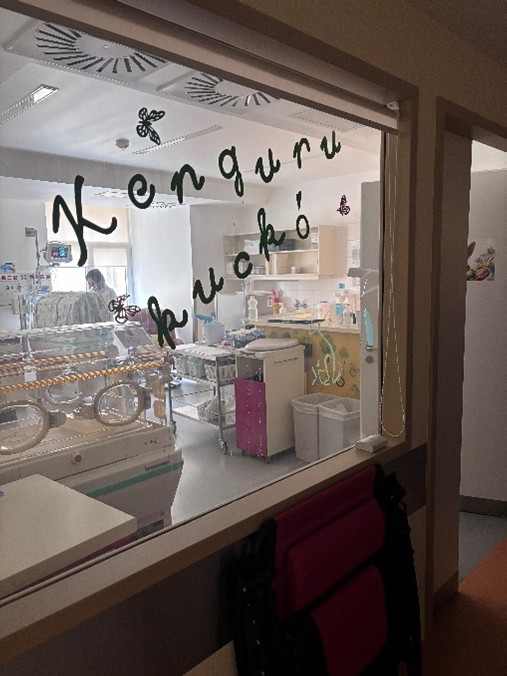
During their journey, Kylie and Yamile visited neonatal units in Germany, the Czech Republic, Bulgaria, and Hungary. Each visit offered a different perspective on what neonatal care systems are already doing well – and where families and professionals still need more support.
In Germany, the dedicated rooming-in opportunities for mothers and babies stood out. Seeing spaces where families could remain together as the level of clinical care decreased highlighted how strongly infrastructure can support parent-infant closeness. For Kylie, this was a powerful reminder that Australia, like many countries, still has room to improve in providing accommodation and models of care that keep parents close to their babies.
In Prague, visits to two NICUs showed another important dimension of care: atmosphere. Family photographs, calm corridors, quiet units, and a visible sense of warmth helped create environments that felt safe and deeply connected to the babies and families cared for there. The experience reinforced how the physical and emotional design of a unit can influence how parents experience neonatal care.
In Bulgaria, Kylie and Yamile visited a smaller, very busy NICU where staff shortages and limited space created clear challenges. At the same time, the friendliness of staff and mothers was unmistakable. Outside the hospital, families celebrated newborns going home with flowers, balloons, and photos – a moving contrast to the experience of neonatal families, for whom birth is often marked first by uncertainty, separation, and concern. The visit reflected a reality many countries share: health systems face pressure, but dedicated professionals and grateful families continue to make meaningful care possible.
In Budapest, the visiting team saw a large maternity hospital with a busy and welcoming NICU. Kangaroo Mother Care was visible in the unit, parents were present beside their babies’ incubators, and doctors and nurses showed strong commitment to their work. Across all visits, one message became clear: despite different structures, resources, and challenges, every system has practices worth learning from.
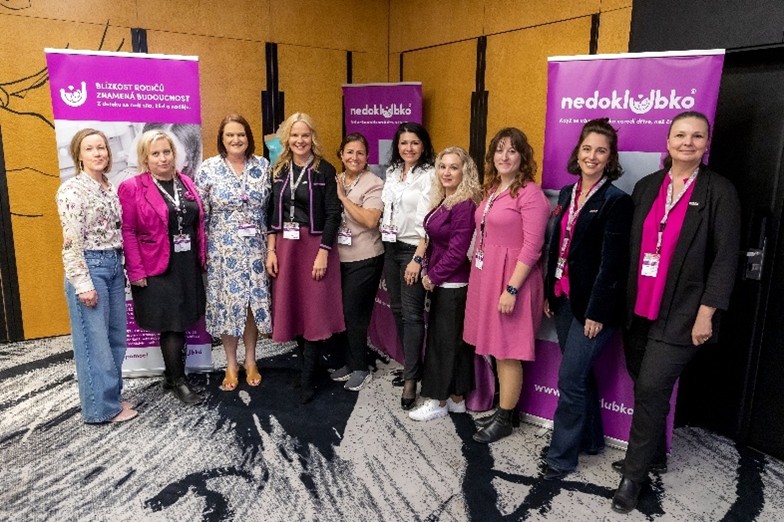
In Prague, Nedoklubko brought together representatives from many perinatology centers across the Czech Republic for a seminar dedicated to skin-to-skin contact, zero separation, and parent support. The event created space for over 50 healthcare professionals, parent advocates, and organizational leaders to discuss how evidence-based approaches can move from individual commitment into routine clinical practice.
Lucie opened the seminar by sharing her personal story and the path that led her to Nedoklubko. She also highlighted the organization’s international collaboration as a member of GFCNI’s international network, emphasizing how global exchange strengthens national advocacy and local support for families.
Yamile then spoke about the impact of Kangaroo Mother Care, drawing on her personal experience as a mother, her engineering background, and her long-standing advocacy for skin-to-skin contact. She emphasized that Kangaroo Mother Care is not an optional addition to neonatal care. It is an essential component that supports stabilization, neurodevelopment, connection, and the well-being of both babies and parents.
Kylie followed with a presentation on the power of peer support. Drawing on the work of Miracle Babies Foundation, she presented the NurtureProgram and described how peer-to-peer support can be adapted to the needs of individual hospitals, while remaining rooted in true partnership with healthcare professionals. The model supports families during hospitalization and beyond, recognizing that the impact of preterm or sick birth often continues long after discharge.
Together, the presentations raised a central question: How can healthcare systems ensure that parental closeness and involvement in care do not depend only on individual champions, but become a standard across neonatal services?
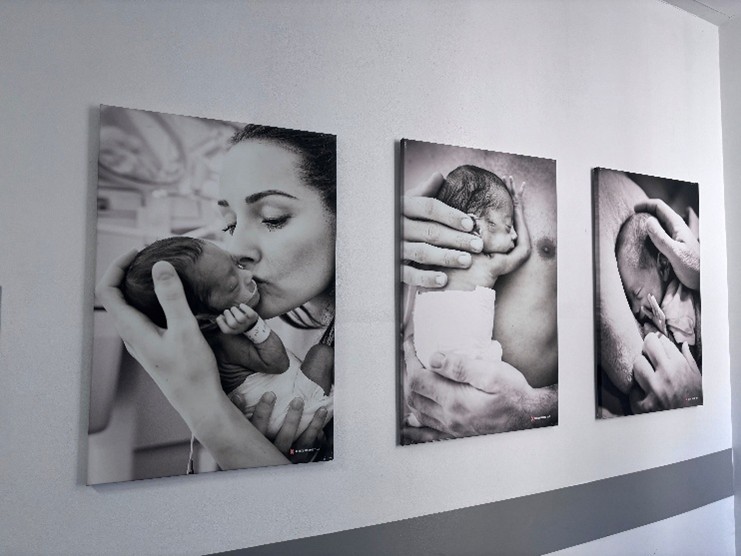
The journey through Europe showed again and again that Kangaroo Mother Care and peer support are deeply connected. Skin-to-skin contact helps keep babies close to the people who know and love them most. Peer support helps parents feel less alone as they learn to navigate the emotional, practical, and medical realities of neonatal care. Both approaches recognize parents not as visitors, but as essential members of the care team. Both require healthcare systems to create the right conditions – through staffing, space, education, trust, and policies that actively support parent presence.
For families, this can change the experience of neonatal care. For professionals, it can strengthen communication, confidence, and continuity. For babies, it supports care that protects development while honoring the relationship at the center of newborn health: the bond between infant and caregiver.
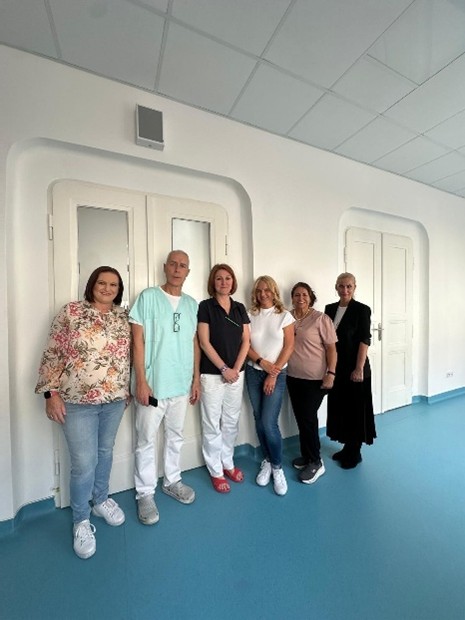
Across the countries visited, Kylie and Yamile saw many encouraging examples: rooming-in models, spacious units, quiet and calm environments, family-centered design, dedicated staff, visible parent presence, and growing recognition of Kangaroo Mother Care.
But Kylie and Yamile also saw areas where neonatal systems still need to do better. Families need more accommodation, more space for Kangaroo Mother Care, more consistent parent inclusion, and better access to peer support. Staff need adequate resources, staffing ratios, and recognition for the essential work they do. These needs are not limited to one country. They reflect common challenges across neonatal care systems worldwide.
The visits reminded both Kylie and Yamile that improvement is not about comparing countries but rather about learning from each other. Every system has strengths just like every system faces constraints. Every parent organization and healthcare team has something valuable to contribute, and we need to make room for these voices and experiences.
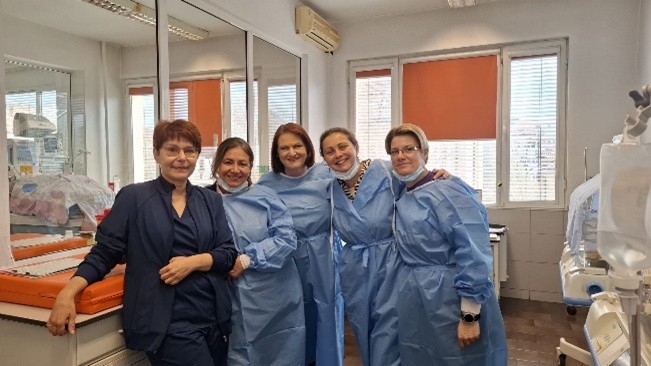
This journey also showed the strength of GFCNI’s global network. Connections made at the Parent and Patient Organizations Summit continued in hospitals, seminar rooms, conversations, and shared meals across Europe. Colleagues became friends, experiences became learning, and local challenges became part of a larger global conversation.
In addition to the visits in Germany, Prague, Bulgaria, and Hungary, Kylie and Yamile also stopped in Geneva and Amsterdam to continue conversations with colleagues from the neonatal and parent advocacy community. Kylie then traveled on to meet with parent advocates and organizations in other countries, including representatives from the Skye High Foundation and Bliss in the United Kingdom. These exchanges included important conversations on advocacy, family support, and paid parental leave – another area where countries can learn from one another.
The world of neonatal care changes through research, policy, clinical practice, and innovation. But it also changes through relationships – through people willing to listen, share, visit, ask questions, and carry new ideas home.
GFCNI is the first global organization and network to unite patients, families, healthcare professionals,
medical staff, and scientists from different disciplines, fields,
and countries – all with the joint goal of advancing the health and quality of care for newborns and their families across the globe.
GFCNI is a non-profit organization established under German public law. Tax Reference Number: 143/235/22619
© 2026 GFCNI. All Rights Reserved.