Pregnancy Complications
Infant- and Family-Centered Developmental Care
Respiratory Infections
Neonatal Eye Health
Hygiene
Rare Diseases
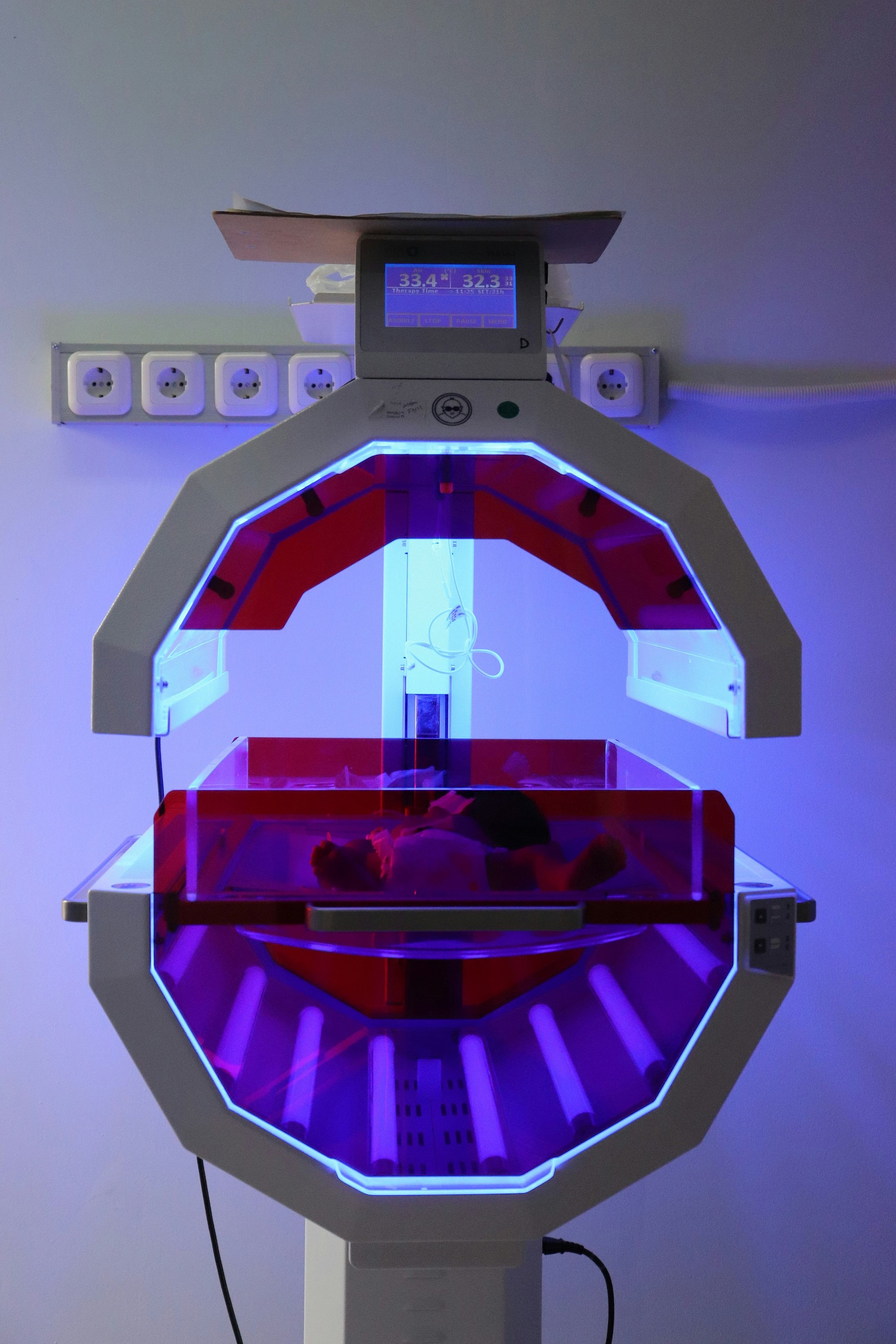
Jaundice is very common in preterm newborns and often needs careful treatment. Phototherapy uses light to lower the otherwise high bilirubin levels in jaundice and helps prevent serious brain injury linked to very high bilirubin. However, questions remain about how long very preterm infants should receive this treatment. A Swedish population-based cohort study examined 4,970 newborns born before 32 weeks of gestation. This study offers reassuring but cautious findings: longer phototherapy was not linked to higher neonatal mortality, but unnecessary exposure should still be avoided.
High bilirubin levels can quickly become dangerous for preterm newborns because bilirubin may build up in the brain and cause serious neurological injury. To prevent this, phototherapy is commonly used. This treatment uses special blue light to help the body break down bilirubin so it can be removed more easily. Phototherapy is therefore an important part of very preterm newborn care, as almost all preterm infants develop hyperbilirubinemia. Phototherapy has reduced the need for exchange transfusions, which are more invasive but still, clinicians continue to assess how to balance benefits and possible risks.
The study used data from the Swedish Neonatal Quality Register. It included newborns born between 22 and 31 weeks of gestation who received neonatal care and had information on phototherapy and bilirubin levels. Researchers compared outcomes by phototherapy duration during the first week of life: 0 to 3 days, 4 to 5 days, and 6 to 7 days.
Longer phototherapy was not associated with higher odds of death between days 8 and 27 of life. Late neonatal mortality occurred in 1.7% of newborns treated for 0 to 3 days, 2.9% treated for 4 to 5 days, and 4.6% treated for 6 to 7 days, but these differences were not significant after adjustment. The findings were similar when the researchers excluded newborns with certain conditions that could affect both treatment and mortality. Peak bilirubin levels were also not clearly linked to late neonatal mortality. Overall, the results suggest that longer phototherapy exposure was not associated with increased mortality in very preterm newborns.
However, longer treatment duration was associated with higher odds of some severe neonatal morbidities, including intraventricular hemorrhage and severe bronchopulmonary dysplasia. The authors noted that these links may reflect confounding, meaning sicker newborns may have needed longer treatment. Because this was an observational study, it cannot prove that phototherapy caused these outcomes.
The authors noted that these links may reflect confounding, meaning sicker newborns may have needed longer treatment. Because this was an observational study, it cannot prove that phototherapy caused these outcomes.
For parents of preterm infants and healthcare professionals, the study supports the continued use of phototherapy when bilirubin treatment is needed. At the same time, it reinforces careful monitoring and avoiding phototherapy that is not clearly necessary. Decisions should be based on bilirubin levels, gestational age, and the infant’s overall condition. Families can ask their neonatal team how bilirubin is being monitored and why phototherapy is started, continued, or stopped.
In summary, this large Swedish study provides reassurance that phototherapy duration was not linked to higher neonatal mortality in very preterm newborns.
Paper available at: Phototherapy, Morbidity, and Mortality in Very Preterm Newborns | Pediatrics | JAMA Network Open | JAMA Network
Full list of authors: Deschmann, E.; Håkansson, S.; Söderling, J.; Norman, M.
DOI: 10.1001/jamanetworkopen.2026.14107
GFCNI is the first global organization and network to unite patients, families, healthcare professionals,
medical staff, and scientists from different disciplines, fields,
and countries – all with the joint goal of advancing the health and quality of care for newborns and their families across the globe.
GFCNI is a non-profit organization established under German public law. Tax Reference Number: 143/235/22619
© 2026 GFCNI. All Rights Reserved.