People Behind Newborn Health
Pregnancy Complications
Infant- and Family-Centered Developmental Care
Respiratory Infections
Neonatal Eye Health
Hygiene
Rare Diseases
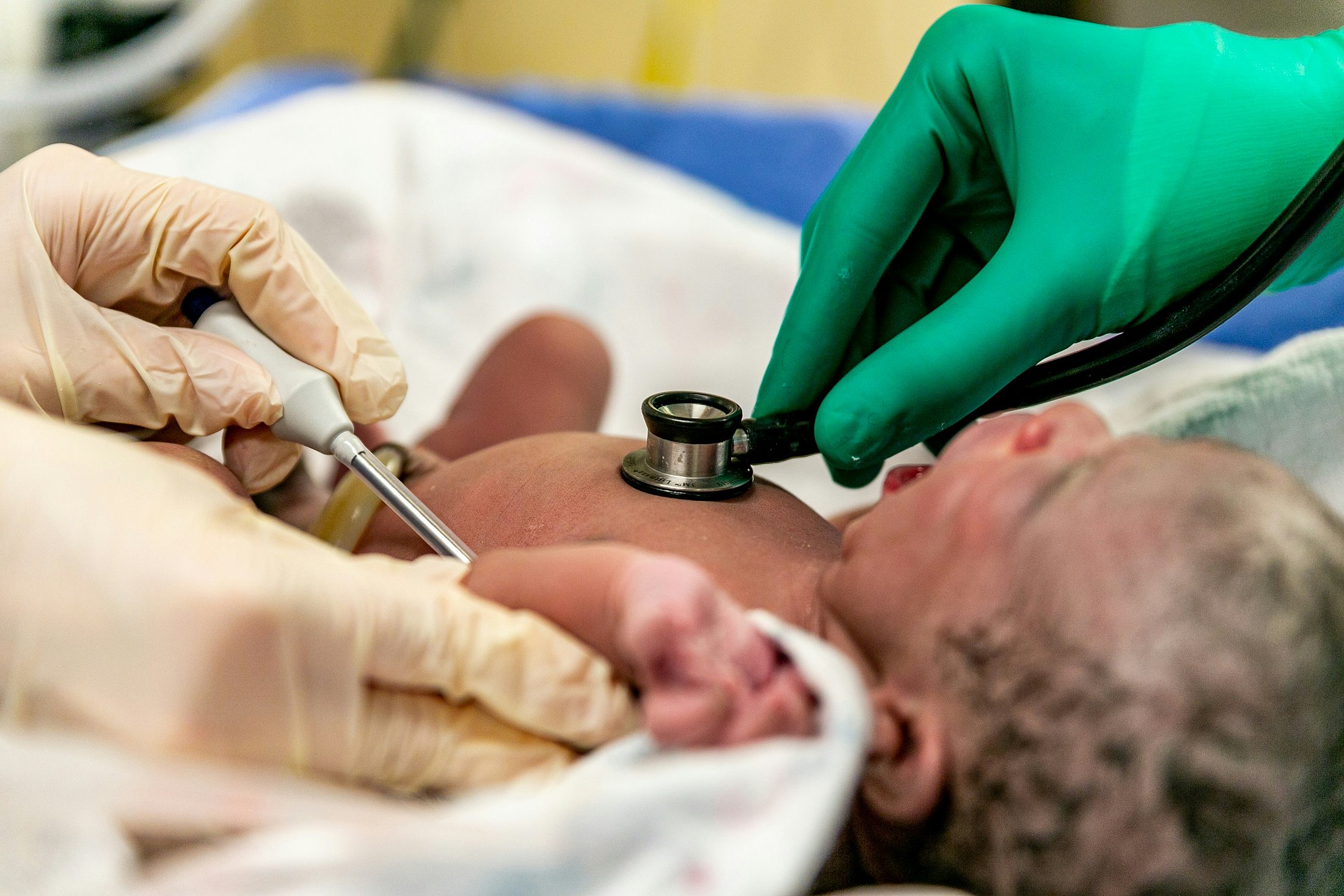
Birth asphyxia, a lack of oxygen during labor and birth, causes an estimated 900,000 newborn deaths worldwide each year. Effective neonatal resuscitation can reduce this risk, but delayed or interrupted ventilation limits its impact. A new non-randomized study from Ethiopia included 1,254 newborns who needed resuscitation after birth. It examined an integrated package of enhanced resuscitation training and new devices for use in clinical care. The package was linked to a lower probability of adverse outcomes, such as death within 24 hours or a low Apgar score.
Survivors of birth asphyxia often face neurological impairments such as cerebral palsy, epilepsy, and learning disabilities. In Ethiopia, birth asphyxia is a leading cause of early newborn death, often due to ineffective ventilation with a bag and mask. Health workers commonly practice neonatal resuscitation through simulation training, yet gaps in performance persist.
The study took place in six public health facilities and included newborns born at 28 weeks of gestation or later who needed resuscitation. Three facilities received standard simulation training, while three received a package of feedback-based manikin training and two devices for real resuscitations. These were a heart rate meter placed on the newborn’s chest and an upright bag-mask with a valve that helps keep the lungs’ small air sacs open.
The researchers measured how often newborns died within 24 hours of birth or had a low Apgar score at five or ten minutes. The Apgar score rates a newborn’s appearance, pulse, grimace, activity, and breathing. Before the package was introduced, the adjusted probability of these adverse outcomes was about 47% in both groups. Afterward, it fell to 40.4% in the control facilities but to 21.9% in the intervention facilities. The analysis adjusted for differences between the groups, such as the mothers’ clinical conditions and the resuscitators’ qualifications. Taking the decline in the control facilities into account, the package was linked to a probability of adverse outcomes that was 18.7 percentage points lower.
In the intervention facilities, the share of newborns with a low Apgar score fell from 47.5% to 22.0% at five minutes and from 37.0% to 15.7% at ten minutes. The control facilities saw smaller declines. By the end of the study, 1.9% of newborns in the intervention facilities died within 24 hours, compared with 6.0% in the control facilities. Admission to the neonatal intensive care unit remained high in all groups, at 55% to 61%, which the researchers attribute to routine admission for observation.
The authors propose several possible explanations for the results. The training manikin mimics real newborn ventilation more closely than standard simulators and gives immediate feedback, which may have improved providers’ motivation and performance. The heart rate meter shows the heart rate instantly and may shorten the delay before resuscitation begins, while the upright bag-mask may support more effective ventilation. Because all elements were introduced together, however, the study cannot show which components contributed to the results.
The authors stress that the findings show an association rather than proof of cause and effect, given the non-randomized design and the small number of facilities. Larger studies, ideally with facilities assigned at random, and cost evaluations are needed before the package is scaled up.
Paper available at: Effect of an integrated neonatal resuscitation package on adverse neonatal outcomes in public health facilities, Ethiopia | BMC Pediatrics
Full list of authors: Moltot, T.; Kebede, T.N.; Chekole, M.S.; Demissie, L.; Taye, B.T.; Lindgren, H.
DOI: 10.1186/s12887-026-07962-5
GFCNI is the first global organization and network to unite patients, families, healthcare professionals, medical staff, and scientists from different disciplines, fields, and countries – all with the joint goal of advancing the health and quality of care for newborns and their families across the globe.
GFCNI is a non-profit organization established under German public law. Tax Reference Number: 143/235/22619
© 2026 GFCNI. All Rights Reserved.